




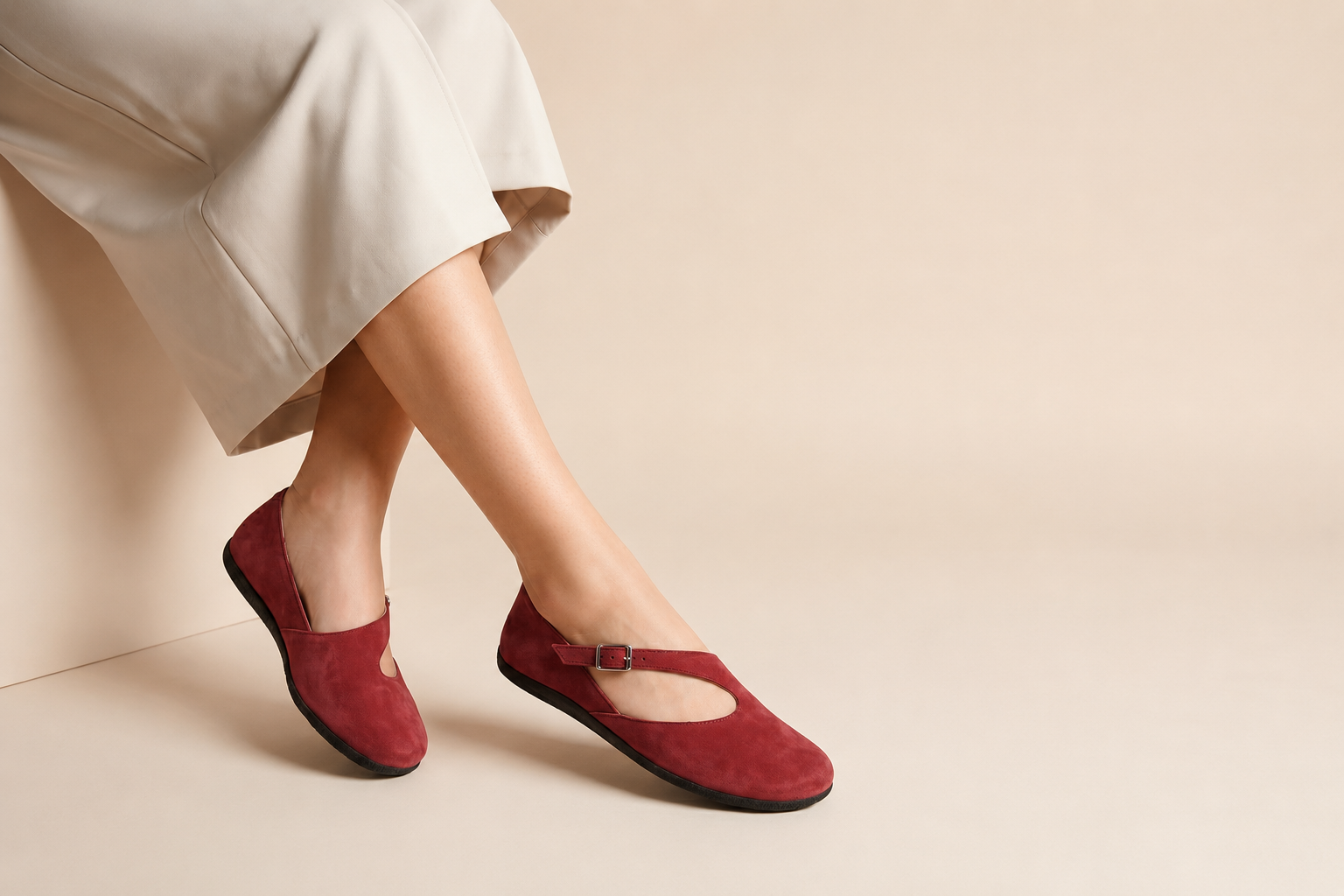
You’ve been wearing shoes your whole life. You’ve probably never thought twice about them. Not until your feet started hurting.
Maybe it’s a dull ache after a long day at the office. Maybe your toes feel cramped after an evening walk around Indiranagar or a Sunday stroll through Lajpat Nagar. Maybe you’ve simply accepted the discomfort, telling yourself that tired feet are just part of a busy day.
They’re not. And the reason is most likely sitting right at the bottom of your wardrobe.
The growing interest in barefoot shoes across India has been eye-opening for a lot of people. It turns out that the shoes most of us have worn our entire lives are quietly working against our feet. But before we get to the solution, it helps to understand exactly what is going wrong inside your current pair.

Why Do Shoes Hurt Your Feet? The Answer Might Surprise You
India is a walking country. Whether you’re navigating the narrow lanes of Chandni Chowk, commuting on foot to the metro in Bengaluru, or standing for hours at a trade event in Mumbai, your feet carry the full weight of your day. Often for 8 to 12 hours straight.
And yet, most of us pick shoes based on looks, brand, or price rather than foot health. The result is a slow, invisible injury that builds quietly over months and years.
Podiatrists and foot health researchers are increasingly clear on this: the design of most conventional shoes works directly against the natural shape of the human foot. It is not your feet that are the problem. It is the shoes.
The 3 Most Common Ways Your Shoes Are Damaging Your Feet
1. The Toe Box Is Too Narrow
Look at your bare foot. Your toes splay outward naturally, widest at the tips. Now look at the front of your shoe. It tapers to a point.
Most conventional shoes, whether formal oxfords, casual sneakers, or sports shoes, squeeze your toes inward to match the shoe’s shape rather than your foot’s actual shape. Over time, this constant compression:
- Causes bunions, the bony bump that forms at the base of the big toe
- Leads to hammertoes, where toes curl downward and become rigid
- Triggers chronic nerve pain and numbness across the forefoot
- Weakens the small muscles in your toes that are critical for balance and stability
 Shoes with a wide toe box give your toes the room they were built to occupy. A simple test you can do right now: try wiggling all five toes freely inside your shoes. If you cannot, the fit is too narrow.
2. The Heel Is Raised, Even in So-Called Flat Shoes
Here is something that surprises most people. Nearly every conventional shoe, including most “flat” styles and everyday trainers, has a raised heel. Even a 10 to 15mm height difference between the heel and forefoot changes how your entire body moves.
When your heel sits higher than your toes:
- Your body weight tips forward unnaturally
- Your calf muscles gradually tighten and shorten
- Your knees, hips, and lower back absorb the extra load and begin to strain
- Your natural walking gait gets disrupted step by step
This is why so many Indians who spend long hours in formal or casual shoes complain not only of sore feet, but of knee pain, tight calves, and chronic lower back issues. Very few ever trace it back to their footwear.
This is exactly what zero-drop shoes are designed to fix. A zero-drop sole keeps your heel and forefoot at exactly the same height, allowing your foot, ankle, knee, and spine to align the way nature intended, just as they do when you walk barefoot.
3. The Sole Is Too Thick and Too Stiff
Shoe brands market heavy cushioning and firm support as a benefit. But your foot was not designed to be carried. It was designed to move.
The human foot contains 26 bones, 33 joints, and more than 100 muscles, tendons, and ligaments. When a thick, rigid sole does all the work, those structures stop engaging. The muscles weaken. The arch flattens. And then, because the shoe itself weakened the foot, it genuinely starts to need the artificial support it was never supposed to depend on.
A thin, flexible sole allows your foot to feel the ground, react to it, and grow stronger with every step. This is the foundational principle behind barefoot shoes and minimalist footwear, and the science behind it continues to build.
What Healthy Footwear Actually Looks Like
Foot health specialists and barefoot movement advocates point to three things every healthy shoe must have:
Wide Toe Box: The shoe should match the widest point of your foot, giving your toes space to spread naturally and grip the ground with every step.
Zero Drop Sole: No heel elevation. Your foot rests flat and level, the same way it does when you stand on natural ground barefoot.
Flexible Sole: The shoe should move with your foot, not against it. If you cannot easily bend the sole in your hands, it is too stiff for natural movement.
Together, these three features define what more and more Indians are switching to. They recreate the conditions of walking barefoot while still protecting your feet from hard city surfaces. If you want to see what this looks like in an actual shoe, explore the Baer collection.
Why Foot Health Matters More for Indian Lifestyles
Urban India puts a particular kind of stress on feet. Long commutes, marble office floors, rough concrete footpaths, and long hours of standing are daily realities across cities like Delhi, Hyderabad, Chennai, and Pune.
Despite this, awareness of foot health remains low among most Indian consumers. People reach for whatever looks good or matches the dress code, then spend the rest of the day wondering why their feet are exhausted by evening.
The encouraging shift is that health-aware Indians are increasingly discovering barefoot shoes and noticing real changes within a few weeks of making the switch.
How Baer Approaches Footwear Differently
At Baer Shoes India, the starting point for every shoe is the natural shape of the human foot, not a fashion template.

The brand is one of the few offering genuine barefoot shoes in India that combine German design expertise with skilled manufacturing from their facility in Ambur, Tamil Nadu. Every shoe is built around three core commitments: a wide toe box that gives your toes room to function, a zero heel drop that supports full-body alignment, and a flexible sole that keeps your foot muscles active throughout the day.
Whether you need professional closed footwear for the office or comfortable everyday shoes for Indian city life, Baer’s collection is built for real feet doing real things.
Your feet have been working hard every single day. It is worth giving them shoes that are actually built the way feet are.
Share:
What Are Barefoot Shoes and Why Should You Try Them?
How to Choose the Right Everyday Shoe for Urban Life in India